Planning your trip to Bhutan with Himalayan Trekking Adventures means stepping into a land of untouched beauty, rich traditions, and seamless travel arrangements. To make your journey smooth and memorable, here’s everything you need to know before you travel.
Visa & Entry
- All travelers except citizens of India, Bangladesh, and Maldives require a visa before traveling to Bhutan.
- Indian nationals may enter with either a valid passport or a Voter Identity Card.
- For other travelers, the process is simple – you only need to send us a scanned copy of your passport photo page (valid for at least 6 months).
- We apply for your visa on your behalf, and once approved, a Visa Clearance Letter will be emailed to you. Your visa will then be stamped on arrival at Paro International Airport.
Accommodation
- Bhutan offers a wide range of accommodation – from family-run farmhouses and eco-lodges to luxury five-star resorts like COMO Uma, Amankora, and Six Senses.
- By government regulation, only three-star hotels and above may host tariff-paying tourists.
- On treks, comfortable weatherproof tents and camping facilities will be provided (except sleeping bags, which you should bring).
- Unlike Nepal, Bhutan does not have tea houses or lodges along trekking routes, so treks here are true wilderness camping experiences.
Food
- Bhutan offers a wide range of accommodation – from family-run farmhouses and eco-lodges to luxury five-star resorts like COMO Uma, Amankora, and Six Senses.
- By government regulation, only three-star hotels and above may host tariff-paying tourists.
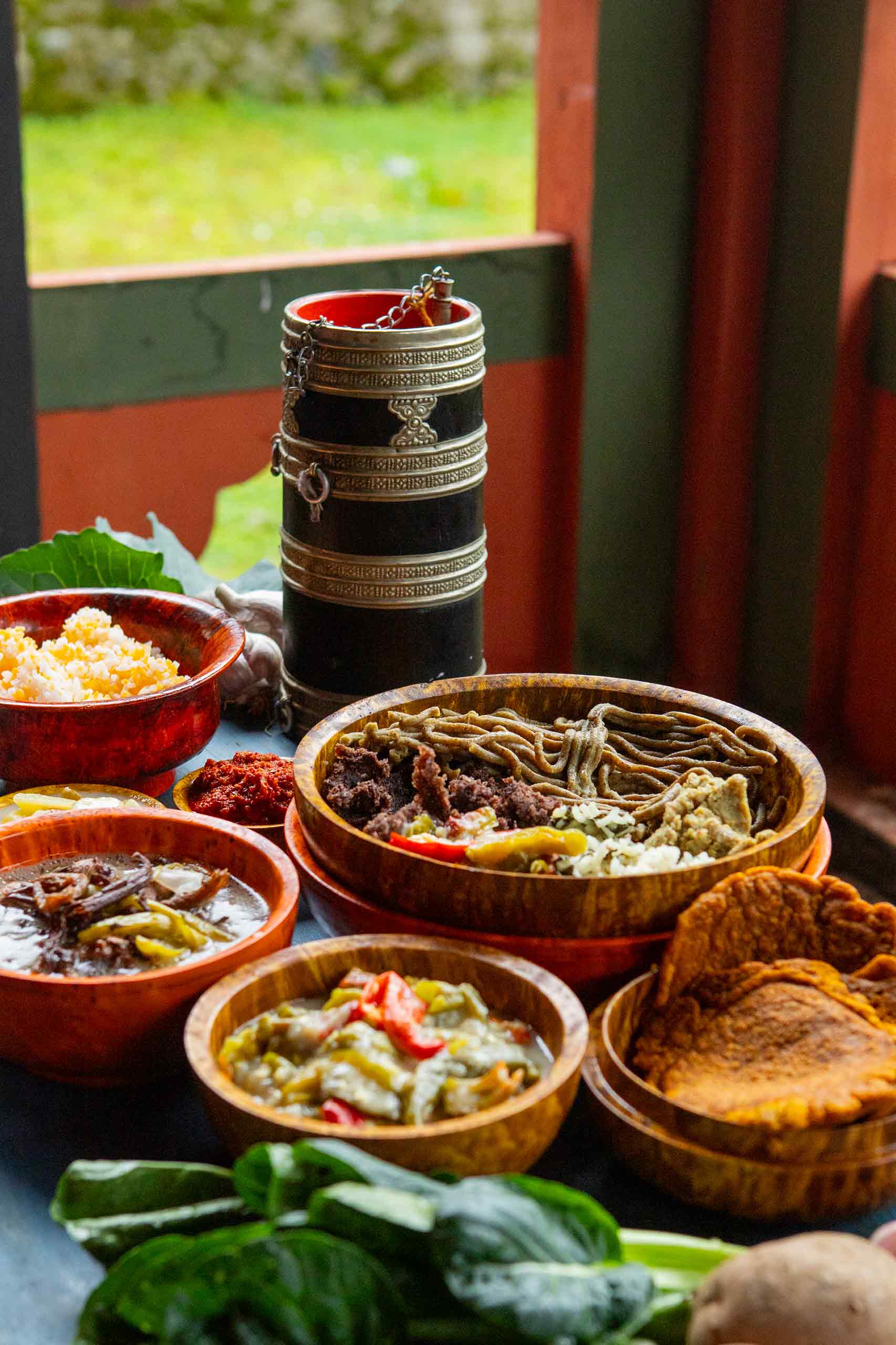
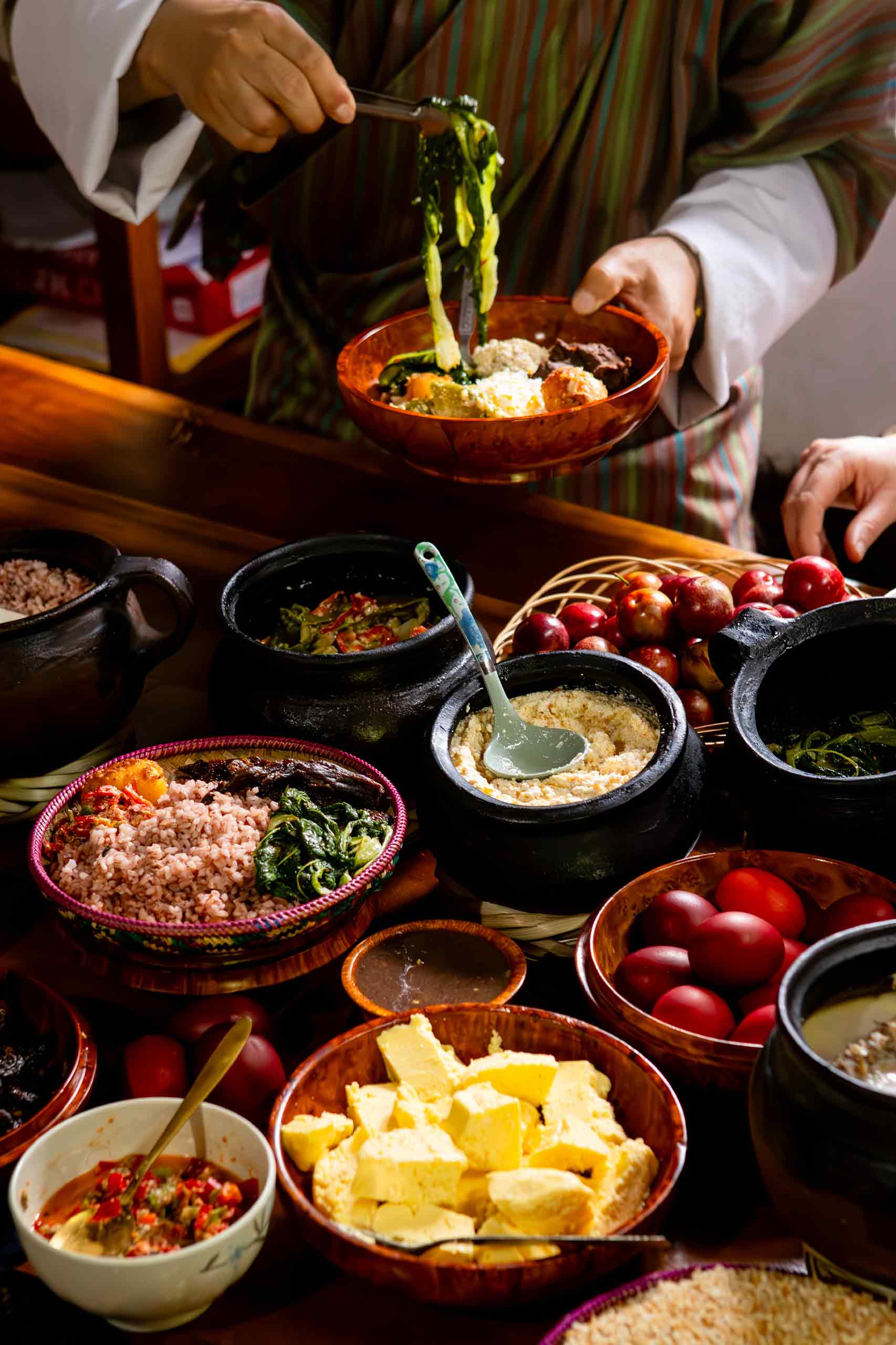
- During treks, our trained cooks prepare nutritious and delicious meals at campsites, ensuring you stay energized even at higher altitudes.
- Indian, Chinese, and continental food options are also widely available in hotels.
Transport
- We use comfortable vehicles depending on group size, from 4WD SUVs for small groups to Toyota coaster buses for larger groups.
- Domestic flights are available to Bumthang, Yonphula, and Gelephu for those wishing to shorten long drives.
Communication
- Mobile connectivity is reliable in major towns but weaker in remote valleys and trekking routes.
- Roaming is available, and local SIM cards can be purchased at the airport.
- Most hotels offer free Wi-Fi.
Weather & Clothing
- October to March: Cold mornings and evenings – pack warm clothes.
- April to September: Warmer months with occasional rainfall (monsoon peaks June–August), so rain gear is essential.
- Respectful casual wear is fine for touring, but modest, formal dress is required when visiting monasteries and dzongs.
Electricity
- Bhutan uses 230 volts, 50 Hz.
- Plugs: three-round-pin (triangle), two-round-pin, or flat-pin types. Adapters are easily available in Paro and Thimphu.
Money
- Currency: Ngultrum (Nu), pegged to the Indian Rupee
- ATMs are available in towns but may not always accept foreign cards.
- Credit cards are accepted in major hotels and shops, with a small service fee.
- Best practice: carry USD cash and exchange at the airport or banks.
- Indian Rupees are accepted (except ₹1000 notes).
Health & Safety
- No mandatory vaccinations required. It’s recommended to update tetanus, diphtheria, and polio boosters.
- Drink only bottled or boiled water. Avoid ice and eat freshly cooked meals.
- Hospitals are available in all districts; healthcare is free even for tourists.
- Trekking above 3,000m may pose a risk of altitude sickness. Symptoms include headache, nausea, or breathlessness. If symptoms occur, descend immediately.
Best Time to Visit Bhutan
Spring
(March–May):
Lush valleys bloom with rhododendrons and wildflowers. The weather is pleasant for both trekking and cultural tours. Excellent mountain views.
Summer
(June–August):
Green landscapes after monsoon showers. Less crowded, but trekking may be hindered by rains in some regions. Ideal for travelers seeking offbeat, cultural, and photography tours.
Autumn
(September–November):
The most popular season for trekking. Skies are crystal clear, offering breathtaking Himalayan vistas. Major cultural festivals like Thimphu Tshechu also take place.
Winter
(December–February):
Cold but rewarding. Snow-capped valleys and fewer tourists make it a great time for cultural tours in western Bhutan. Shorter treks are possible.